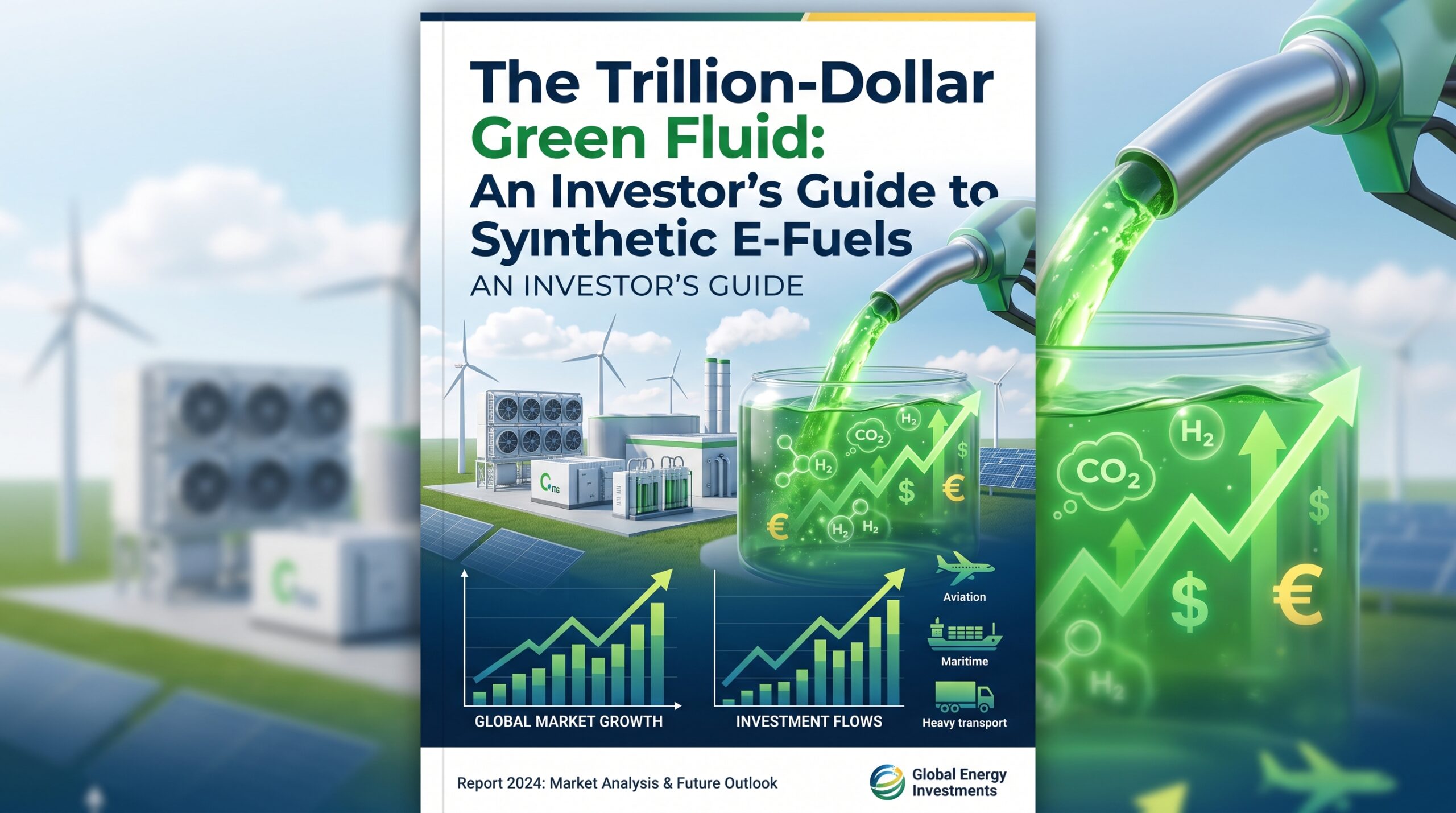
The global push for net-zero emissions has backed the automotive industry into a corner. While electric vehicles capture the headlines, an awkward truth remains: millions of internal combustion engines, long-haul trucks, and airplanes cannot simply switch to batteries overnight. This massive infrastructure gap creates a critical bottleneck for climate goals, leaving fleet operators and logistics giants scrambling for a drop-in solution.
Synthetic e-fuels have officially entered the chat. By capturing carbon dioxide directly from the air and combining it with hydrogen split from water using renewable energy, manufacturers are creating a molecularly identical replacement for traditional petroleum. The beauty of this technology lies in its immediate compatibility with our existing trillions of dollars in global fueling infrastructure. As a venture capitalist or retail investor, ignoring this pivot means missing out on what may become the ultimate bridge fuel of the next half-century.
High-Value Market Signals for E-Fuel Commercialization
The investment thesis for synthetic e-fuels relies heavily on legislative mandates rather than just voluntary corporate adoption. European Union regulations require all new cars sold after 2035 to be carbon-neutral, specifically leaving a massive regulatory loophole open for vehicles running exclusively on e-fuels. This political tailwind has shifted e-fuels from a niche laboratory experiment into a highly strategic macroeconomic asset class.
Industrial scale is the next major milestone. Early-stage production plants, like the Haru Oni project in Chile, are already proving that synthetic gasoline can be manufactured using wind power and shipped globally. Major automotive players are pouring hundreds of millions into proprietary refining techniques to bring the per-liter cost down to parity with fossil fuels. For early backers, the sweet spot lies in funding the scale-up phase—specifically companies pioneering advanced catalysts that lower the energy penalty of the carbon-capture process.
Evaluating the Top Synthetic Fuel Stocks and Infrastructure Providers
Navigating this asset class requires looking past the hype to find the businesses holding defensive moats. Investors should focus on companies that control the intellectual property for direct air capture (DAC) and high-efficiency electrolyzers. These two components represent the primary capital expenditures in the production pipeline. If a company can shave even 5% off the electrical energy required to split hydrogen, it gains an immediate, massive competitive advantage in market pricing.
Another highly profitable avenue is the retrofitting of existing midstream oil and gas infrastructure. Companies specializing in industrial blending, seaport storage, and distribution pipelines are uniquely positioned to cash in without taking on direct technology risks. Instead of trying to pick a single winning fuel manufacturer, investing in the infrastructure companies that transport the fluid acts as a classic “picks and shovels” strategy for the green energy boom.
Clearing the Hurdles: Efficiency Realities and Cost Curves
Let’s address the elephant in the room: the current thermodynamic efficiency of synthetic fuel is undeniably low. Turning green electricity into hydrogen, combining it with carbon, burning it in an engine, and losing energy as heat achieves only about a 10% to 15% well-to-wheel efficiency. Compared to the 70%+ efficiency of a battery electric vehicle, the math looks rough on paper.
However, efficiency isn’t the only metric that matters to commercial logistics. High energy density, rapid refueling times, and weight savings make e-fuels irreplaceable for maritime shipping and aviation where heavy batteries are completely non-viable. As carbon taxes rise globally, the economic penalty of low efficiency will be heavily offset by the regulatory penalties placed on dirty crude. The cost curve is projected to drop significantly over the next decade as renewable energy capacity expands worldwide.
A Strategic Framework for Your Renewable Energy Portfolio
Allocating capital into the alternative fuel space demands a balanced, multi-tiered approach. We recommend splitting exposure between established legacy energy firms pivoting to green chemistry and pure-play technology startups. This strategy cushions your portfolio against the high failure rates of early-stage laboratories while keeping you exposed to explosive upside potential if a breakthrough occurs.
Keep a close eye on joint ventures between traditional automakers and synthetic fuel refiners. These partnerships provide guaranteed off-take agreements, ensuring that the fuel produced has an immediate buyer waiting at the pump. Diversifying across different geographic regions is also crucial, as local subsidies and clean energy credits will heavily dictate which production facilities achieve profitability first.
FAQ
Can synthetic e-fuels be used in normal cars?
Yes, they are engineered to be direct drop-in replacements. You can pour synthetic gasoline straight into a standard internal combustion engine without modifying a single component or fuel line.
What is holding back mass adoption of alternative fuels?
The primary obstacle is production cost and energy capacity. Manufacturing e-fuels requires immense amounts of renewable electricity, making the final product significantly more expensive than fossil fuels until production scales up.
How do e-fuels compare to electric vehicles for investors?
Electric vehicles are ideal for light passenger cars and urban transport. E-fuels represent a parallel, highly lucrative investment sector focused on solving decarbonization for heavy industry, aviation, and existing global fleets.
Leave a Reply