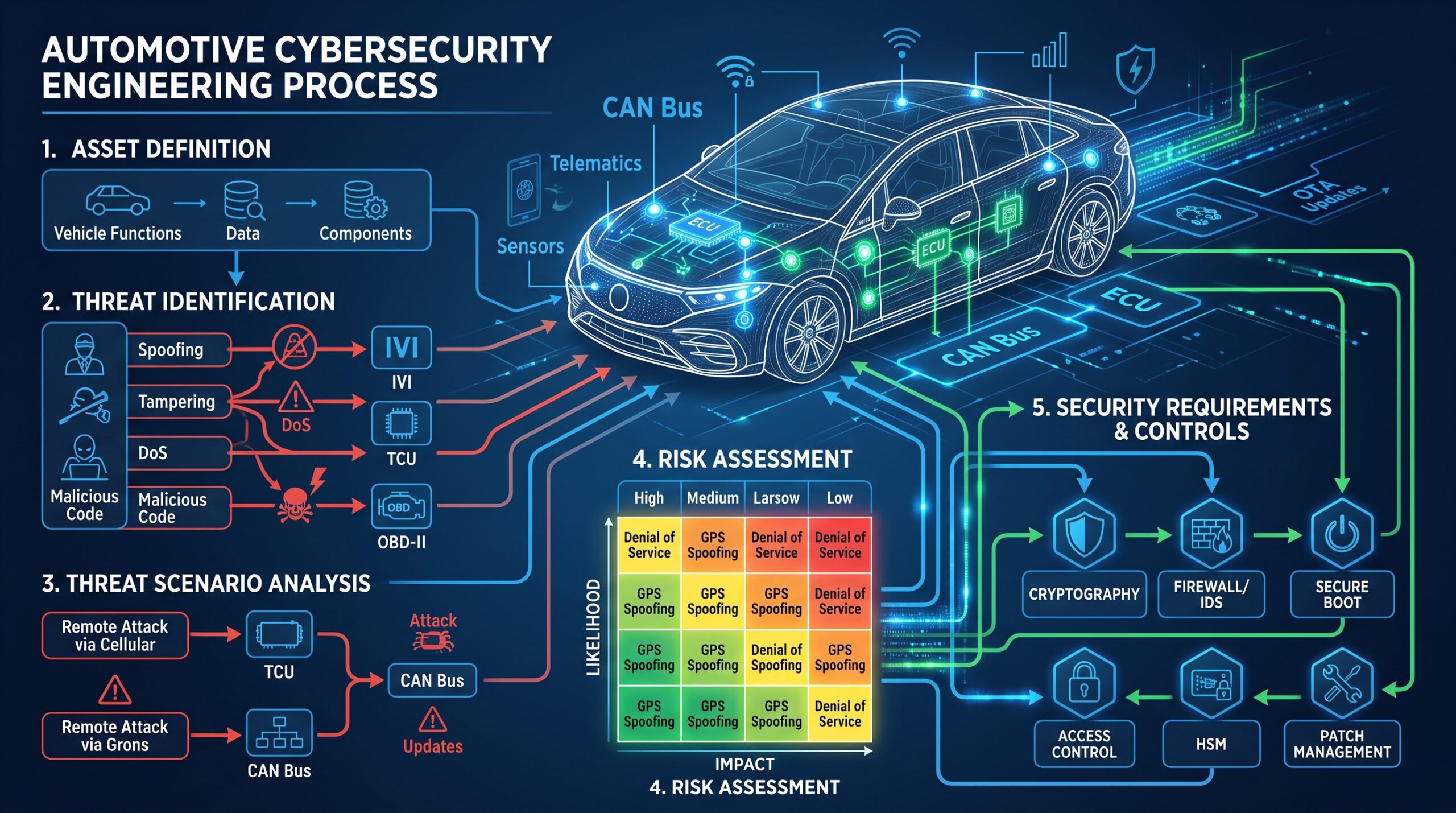
Modern vehicles pack more computing power than many laptops, yet security considerations often trail far behind flashy new features. Manufacturers race to deliver connectivity and autonomy while attackers sharpen their tools for exploiting these complex systems.
Threat Analysis and Risk Assessment, commonly known as TARA, forms the crucial foundation of effective automotive cybersecurity engineering. Without thorough TARA processes, even well-intentioned security measures can miss critical vulnerabilities. Understanding this systematic approach helps everyone involved make smarter decisions about vehicle protection.
What Makes TARA Essential in Automotive Cybersecurity
TARA provides a structured methodology for identifying potential threats and evaluating their likelihood and impact. Engineers map out attack vectors across the entire vehicle architecture, from wireless interfaces to internal networks.
This proactive analysis goes beyond simple checklists. It considers how different systems interact and how a compromise in one area might cascade through critical safety functions. The process demands deep knowledge of both automotive systems and evolving cyber tactics.
In my discussions with security engineers, those who skip comprehensive TARA often discover expensive problems much later during penetration testing or, worse, after deployment.
Key Steps in Conducting Effective TARA
Begin by creating detailed asset inventories that catalog every electronic control unit and data flow. Identify trust boundaries and potential entry points that attackers might target.
Next comes threat modeling where teams brainstorm realistic attack scenarios based on current capabilities and motivations of various adversaries. Risk assessment then scores these threats according to severity, likelihood, and potential consequences.
Prioritization follows naturally from this analysis. Resources get allocated to the highest risk areas first while documenting residual risks that require ongoing monitoring. Regular reviews ensure the assessment stays current as new technologies and threats emerge.
Implementing TARA Findings into Vehicle Design
Security requirements derived from TARA must influence every stage of development. Secure boot processes, encrypted communications, and hardware isolation techniques often emerge directly from thorough risk assessments.
Manufacturers increasingly integrate TARA into their development lifecycle rather than treating it as a final checkbox. This shift leads to more resilient architectures from the ground up instead of bolting security onto existing designs.
Real-world benefits appear clearly during independent audits. Vehicles developed with strong TARA foundations consistently demonstrate better resistance to sophisticated attack attempts.
The Future of TARA in Automotive Cybersecurity
Regulatory frameworks continue pushing for more standardized and thorough risk assessment practices across the industry. Collaboration between manufacturers, suppliers, and security researchers will strengthen these processes over time.
Emerging technologies like software-defined vehicles will require even more dynamic TARA approaches that can adapt quickly to changing conditions. The most successful companies will treat TARA not as a compliance exercise but as a genuine competitive advantage.
Consumers ultimately benefit when manufacturers embrace rigorous threat analysis from the earliest design phases. Safer, more secure vehicles represent the true goal of effective automotive cybersecurity engineering.
FAQ
What exactly does TARA stand for in automotive cybersecurity?
Threat Analysis and Risk Assessment — a systematic process for identifying and prioritizing security risks in vehicle systems.
Who typically performs TARA during vehicle development?
Cross-functional teams including cybersecurity specialists, systems engineers, and safety experts collaborate on comprehensive assessments.
How often should TARA be updated for a vehicle platform?
Regular reviews are essential, particularly when new features are added or significant software updates occur.
Can small automotive suppliers effectively implement TARA?
Yes, scaled versions of the process work well for smaller organizations focusing on their specific components and interfaces.
Does strong TARA guarantee a vehicle cannot be hacked?
No process eliminates all risk, but thorough TARA significantly reduces the attack surface and improves overall resilience.
Strengthen Automotive Cybersecurity Through Better TARA Practices
Effective automotive cybersecurity engineering truly begins with solid Threat Analysis and Risk Assessment. The time invested in proper TARA pays dividends through fewer vulnerabilities and stronger overall vehicle security.
Whether you’re an engineer, manufacturer, or informed consumer, understanding TARA helps you ask better questions and demand higher standards. Start incorporating these principles into your work or purchasing decisions today. The road to genuinely secure connected vehicles starts with rigorous, thoughtful risk assessment.