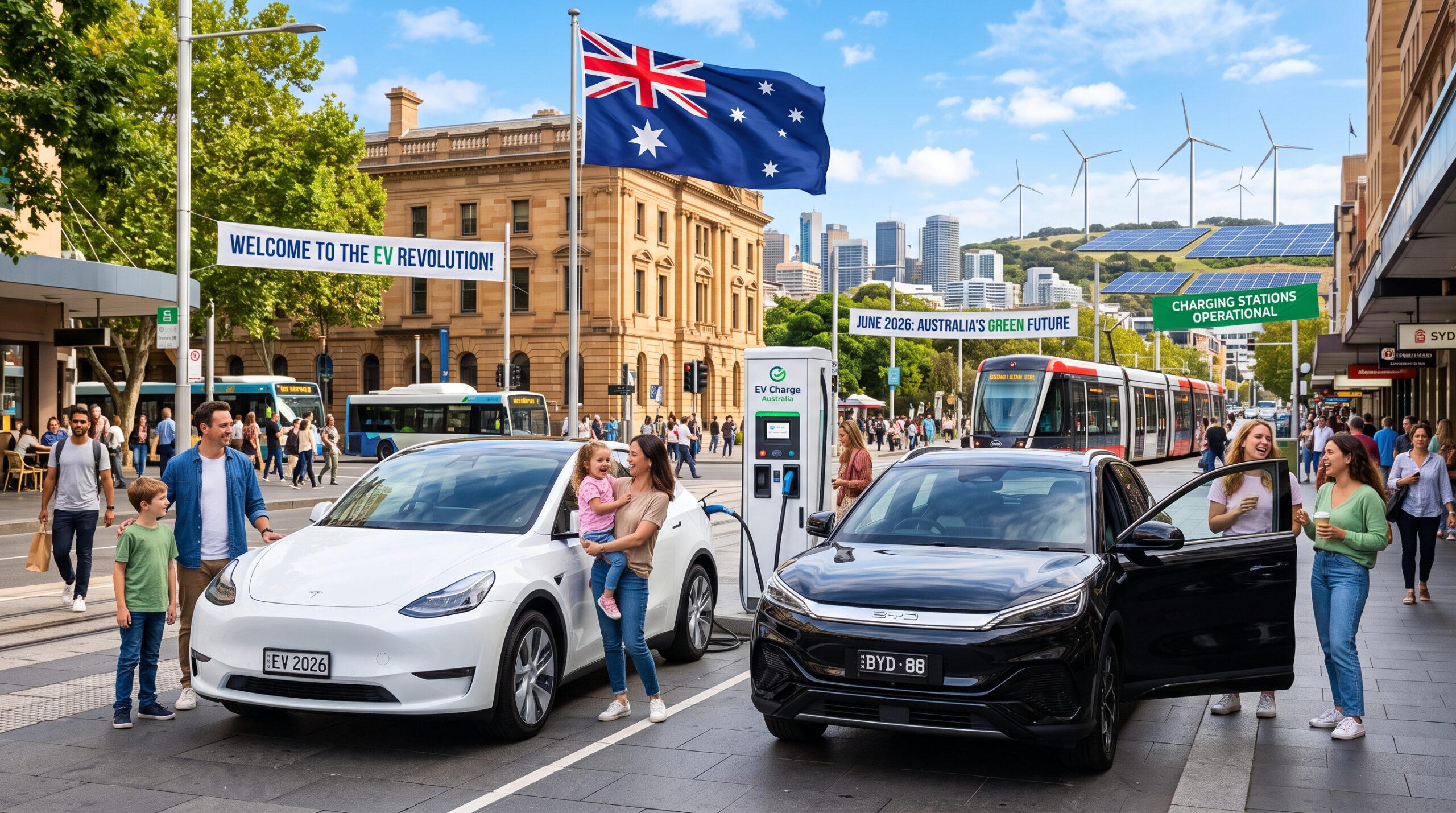
You’re watching fuel prices climb again. The thought of another big service bill on your old ute makes you wince. Meanwhile, friends keep raving about their new EVs—silent rides, instant power, and tiny running costs. June 2026 just delivered proof that Australia’s shift to electric is accelerating fast. Tesla and BYD smashed records while EVs hit a stunning 23.4% market share. This isn’t hype. It’s a genuine turning point.
Record-Breaking Month Reshapes the Market
Total new vehicle sales hit an all-time high of over 140,000 in June. EVs didn’t just participate—they powered much of that surge, claiming roughly 23.5% share according to official figures. That’s a massive jump from previous years.
Tesla delivered a record 8,670 vehicles, with the Model Y alone storming to 8,072 sales and becoming Australia’s top-selling vehicle outright for the second month running. BYD went even bigger, moving 18,881 units and nearly overtaking Toyota for the monthly crown.
I chatted with a mate in Sydney who picked up a BYD recently. He was blown away by how quickly the deal came together and how much he’s saving on “fuel” already. Stories like his are multiplying across the country. The numbers back it up—this momentum feels permanent.
Electrified vehicles of all types (EVs, PHEVs, hybrids) made up nearly half the market. Petrol and diesel lost serious ground. Australian buyers are voting with their wallets.
Why Tesla Continues to Lead the Charge
Tesla’s performance highlights the strength of its lineup and brand. The Model Y’s dominance shows Aussies love practical, high-performing SUVs that double as family haulers and weekend thrill machines. Over-the-air updates and the growing Supercharger network remove common worries.
Their direct sales model cuts out haggling and delivers transparency many traditional dealers still struggle with. In a month of record overall sales, Tesla’s focus on volume models paid off handsomely.
From my own test drives, the real-world efficiency and build quality keep improving. Owners report lower total costs of ownership that make sense even without heavy incentives. This appeals to pragmatic buyers tired of volatile petrol prices.
Tesla’s success also pressures others to step up. The ripple effect benefits the whole ecosystem.
BYD’s Explosive Growth Signals Broader Choice
BYD’s 18,881 deliveries mark another company best. Their range of affordable, well-equipped models is winning over buyers who want electric without premium pricing. From compact hatchbacks to family SUVs, they’re filling gaps in the market.
Chinese manufacturers like BYD bring fresh competition that drives innovation and lowers prices industry-wide. Features that once cost extra now come standard, giving you more bang for your buck.
A colleague down in Melbourne switched to a BYD Sealion and can’t stop talking about the tech and comfort. He reckons it changed his whole driving experience for the better. These personal wins are spreading fast through word of mouth.
The result? More options for you, whether you need something budget-friendly or loaded with luxury touches. Diversity in the EV space is finally arriving.
What This Means for Everyday Australian Drivers
This landmark month proves EVs work in real Australian conditions—vast distances, varied climates, and practical needs. Charging infrastructure keeps expanding, especially in key urban and highway corridors. Range anxiety fades as real-world data builds confidence.
For families, tradies, or commuters, the savings on running costs can be life-changing. Electricity is cheaper and more stable than petrol long-term. Maintenance is simpler with fewer moving parts.
Consider your own situation. Calculate your annual kilometres and fuel spend. Many discover the payback period on an EV is shorter than expected, especially with current electricity rates and potential home solar.
Government policies, state rebates, and fleet decisions are aligning too. This creates a virtuous cycle that accelerates adoption.
Challenges and the Road Forward
Supply chains, grid upgrades, and regional charging remain works in progress. Not every rural buyer has easy access yet. However, the pace of change is impressive, with new stations popping up regularly.
Pricing volatility and model availability can still frustrate, but competition is easing those pains. More local manufacturing and assembly announcements could strengthen resilience.
The shift also brings environmental wins—lower emissions and quieter streets. We all breathe easier when adoption climbs.
This June result shows Australia is catching up to global leaders. The electric transition isn’t coming. It’s here, and it’s gaining speed.
Time to act. If you’re thinking about going electric, visit showrooms this week. Test drive a Model Y or BYD model that fits your lifestyle. Talk to current owners in your area. Crunch the numbers for your commute. The landmark month we just witnessed might be the perfect nudge to join the growing wave. Your future self—and your wallet—will thank you.
FAQ
How significant is the 23.4% EV share?
It’s a new record and reflects strong mainstream acceptance, especially with total sales also hitting records.
Which brand performed best in June 2026?
BYD led with nearly 19,000 deliveries, while Tesla set its own record and topped the overall vehicle charts with the Model Y.
Is now a good time to buy an EV in Australia?
Yes—growing supply, competitive pricing, and proven savings make it attractive. Check state incentives and home charging options.
What about charging for long trips?
Highway networks are expanding rapidly. Apps and planners make trips straightforward for most popular routes.
Will this growth continue?
Signs point to yes, with more models arriving, infrastructure improving, and cost advantages becoming clearer every month.