You’ve been eyeing that electric ride for months. Maybe you’re tired of high gas prices or dreaming of instant torque on your daily commute. Then Q1 2026 numbers drop, and suddenly the headlines scream slowdown. What’s really happening in the U.S. EV market? We dug into the data to cut through the noise. These five takeaways reveal opportunities you might be missing—and why the story isn’t as grim as some claim.
The Sales Drop Is Real But Slowing Down
Americans bought roughly 216,400 new EVs in the first three months of 2026. That’s a sharp 27% plunge from the same period last year. Yet here’s the twist—the decline eased compared to Q4’s steeper fall.
The end of federal tax credits hit hard. Many buyers rushed purchases in late 2025, pulling sales forward. Now the dust is settling. Quarter-over-quarter, sales only dipped about 7.8%. That suggests the market is finding a new baseline rather than free-falling.
A buddy of mine who sells cars in the Midwest told me foot traffic for EVs stabilized in March. Shoppers who truly want electric are still showing up—they’re just more price-sensitive. This stabilization gives manufacturers breathing room to adjust strategies without panic.
Overall new vehicle sales also softened, so EVs held their ground at 5.8% market share. Not growth, but not collapse either. Smart buyers are watching for deals as inventory builds in certain segments.
Tesla’s Dominance Just Got Stronger
Tesla moved about 117,300 EVs in Q1, snatching over 54% of the entire U.S. market. That’s up significantly from last year’s share. While the broader market shrank, Tesla lost less ground than rivals.
The Model Y alone crushed it with over 78,000 units. Model 3 followed solidly. Their direct-to-consumer approach, Supercharger network, and software updates keep owners loyal and attract new ones.
I’ve driven several Teslas over the years, and the seamless over-the-air updates still blow me away. One software tweak can add real-world range or new features overnight—something traditional automakers struggle to match. This ecosystem advantage shines when incentives vanish.
Competitors combined sold fewer units than Tesla alone. That gap sends a clear message: execution and brand strength matter more than ever in a tougher market.
Used EVs Are Booming and Opening Doors
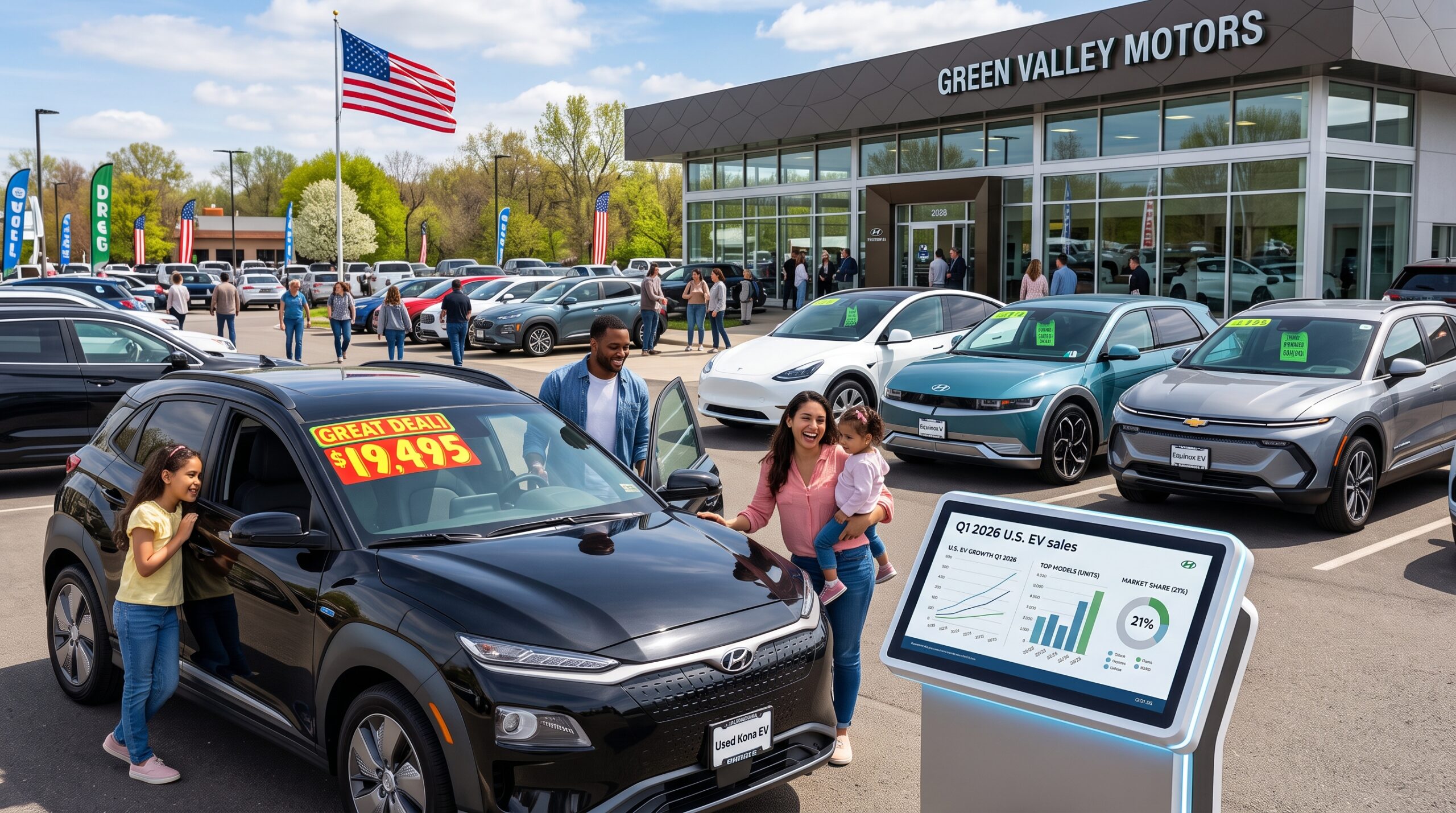
While new sales cooled, used EV transactions jumped 12% year-over-year to around 93,500 units. Prices have dropped closer to gas equivalents, with many solid options now under $25,000.
This is huge for budget-conscious families. The gap between used EVs and similar gas cars narrowed dramatically. Lower entry prices plus cheaper “fuel” costs make ownership accessible.
Think about your situation. If you’ve hesitated on a new EV due to upfront cost, a two- or three-year-old model with remaining battery warranty could be perfect. Many come with fast-charging capability and modern safety tech.
Dealers report used EVs moving quickly—often in line with gas cars. This secondary market keeps momentum alive even when showroom traffic dips.
Legacy Automakers Face Tough Choices
Many big manufacturers saw steeper drops than Tesla. Some delayed launches or scaled back EV plans amid the incentive changes and higher interest rates. Hybrids gained attention as a bridge for hesitant buyers.
Yet pockets of strength exist. Certain crossovers and SUVs from Hyundai, GM, and others still moved decent volume. The Equinox EV, Ioniq 5, and Mustang Mach-E appeared in top lists.
From what I’ve observed talking to industry folks, the winners will be those who focus on real customer pain points—range anxiety, charging access, and total cost of ownership. Generic EVs won’t cut it anymore. Brands need compelling, affordable options that stand out.
This shakeout could lead to better products long-term. We might see more innovation in accessible segments rather than just luxury halo cars.
Regional Differences and Policy Matter More Than Ever
California still leads but felt the credit expiration sharply. Other states with strong local incentives or high gas prices held up better. Charging infrastructure growth continues, supporting owners regardless of national policy shifts.
Gas prices hovering higher in many areas remind drivers why EVs make financial sense over time. Home charging savings add up fast for commuters.
If you’re considering going electric, check local rebates and utility programs. They’re filling some gaps left by federal changes. Tools like ZIP-code searches for incentives can uncover hidden deals.
The market is maturing. Early adopters drove initial growth; now it’s shifting toward mainstream buyers who need practical value.
Bottom line: The EV transition isn’t dead—it’s adjusting to reality. Savvy drivers can find great opportunities right now in both new and used markets.
Ready to make your move? Research specific models that fit your driving habits, calculate your potential savings, and test drive a few options this month. The right EV (or even a plug-in hybrid) could surprise you with how well it fits your life. Stay curious, keep learning, and drive what makes sense for you.
FAQ
How bad was the Q1 2026 EV sales drop really?
Sales fell 27% year-over-year to about 216,400 units, but the pace of decline slowed, and market share held steady at 5.8%.
Is Tesla the only brand doing well?
They dominate with over 54% share, but some models from Hyundai, GM, and others continue to sell solidly in key segments.
Should I buy a used EV now?
Many great deals exist with prices near gas equivalents and strong demand for low-mileage examples. Check warranties carefully.
What about charging and range concerns?
Infrastructure keeps expanding. Most drivers find home charging covers daily needs, with public networks handling longer trips.
Will sales rebound later in 2026?
New models, potential policy tweaks, and stabilizing prices could help. Watch used market trends and manufacturer announcements closely.